Introduction: The Technology Revolution in Industrial Construction
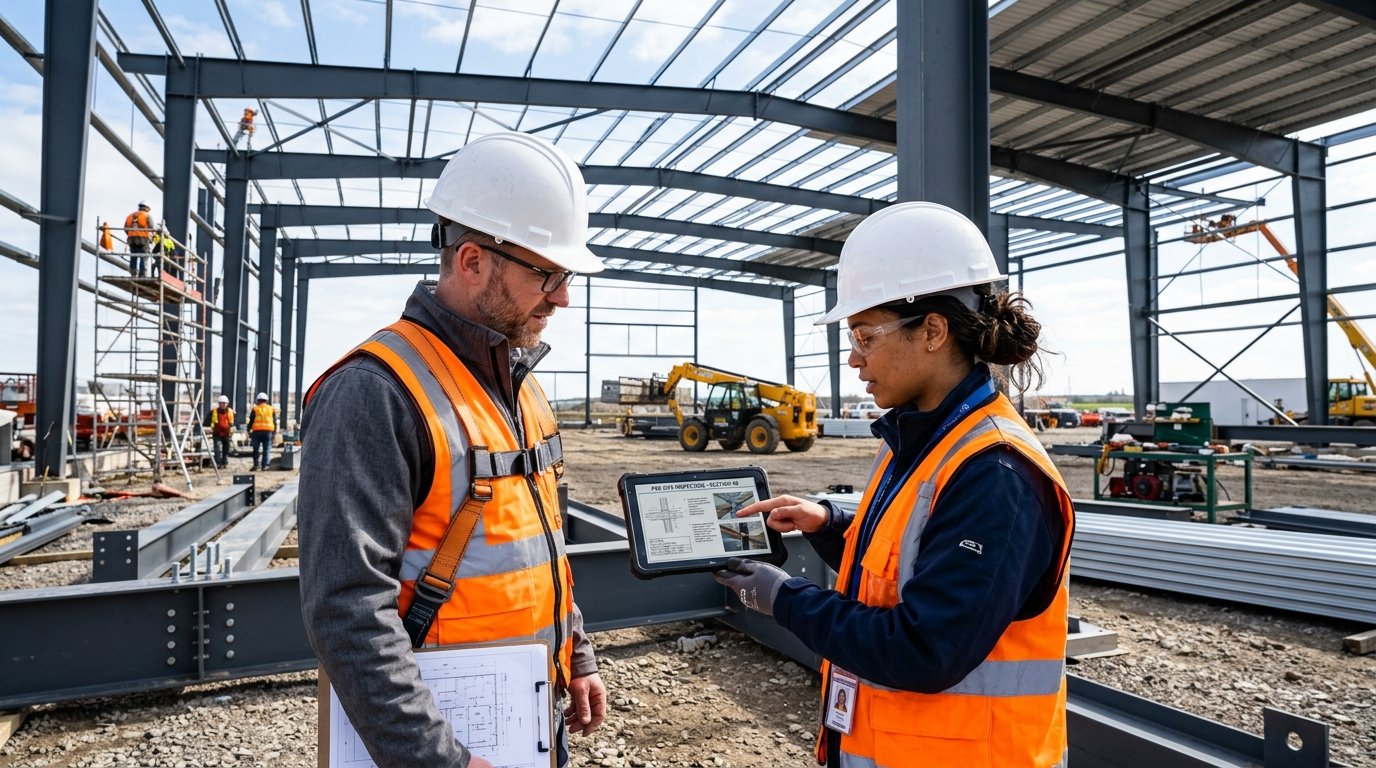
The global construction and industrial infrastructure sector is witnessing a digital and technological revolution. Driven by the need for faster project execution, reduced material waste, enhanced structural safety, and long-term environmental sustainability, industrial builders across India are rapidly adopting next-generation construction technologies. From Building Information Modeling (BIM) and automated off-site prefabrication to smart material sensor integration, technology is reshaping every phase of project development.
1. Building Information Modeling (BIM) & Digital Twins
BIM has transformed from a 3D visualization tool into a comprehensive multidimensional project management asset. 4D (time schedule integration) and 5D (cost estimating) BIM platforms allow structural engineers, architects, and roofing contractors to simulate material performance prior to ground breaking. Digital twins of industrial facilities continuously collect data from structural sensors, monitoring roof load capacity, thermal stress, and moisture levels in real-time.
2. Automated Off-Site Prefabrication & Modular Construction
Modular pre-engineered building (PEB) solutions have dramatically reduced site construction timelines. Precision-cut steel structural frames, pre-drilled composite wall panels, and factory-fitted multiwall polycarbonate daylighting units arrive at the job site ready for assembly. This off-site precision eliminates material wastage on site, ensures stringent quality control, and cuts overall construction schedules by 40 to 50 percent.
3. Next-Generation Material Science & Smart Polymers
Material technology has evolved to produce self-healing concrete formulations, phase-change insulation materials, and smart light-diffusing polycarbonate sheets. Thermoplastic sheets with nanostructured infrared-blocking additives allow visible light to pass while reflecting heat-generating solar radiation, maintaining comfortable interior temperatures in unconditioned industrial warehouses.
4. Drones, Robotics & AI Site Safety Monitoring
Unmanned Aerial Vehicles (UAVs) equipped with thermal imaging cameras conduct roof inspections, monitor large structural spans, and track construction progress across sprawling industrial sites. AI-powered video analytics monitor worker safety compliance, structural alignment, and material staging, drastically minimizing job-site hazards.
5. Sustainable Technologies & Net-Zero Industrial Envelopes
The drive toward Net-Zero carbon industrial facilities has accelerated the integration of Building-Integrated Photovoltaics (BIPV), high-R-value sandwich panel insulation, and rainwater harvesting systems. Industrial building envelopes are engineered as active energy management systems rather than passive shelters.
Frequently Asked Questions (FAQs)
Q1: How does modular construction improve quality control?
Modular components are manufactured in factory-controlled indoor environments using automated machinery, ensuring consistent dimensional tolerances, exact material curing, and rigorous quality inspection before dispatch.
Q2: What are smart daylighting systems in industrial buildings?
Smart daylighting systems combine optical polycarbonate diffusion sheets with automated artificial light sensors to dim electric lights automatically when natural daylight is sufficient.
Conclusion
Technology adoption is no longer a luxury for industrial builders—it is an essential operational requirement. By leveraging digital modeling, modular prefabrication, advanced polymers, and robotic automation, India’s construction industry is building safer, faster, and more sustainable industrial facilities for the modern era.