The Industry 4.0 Revolution in Production Plants
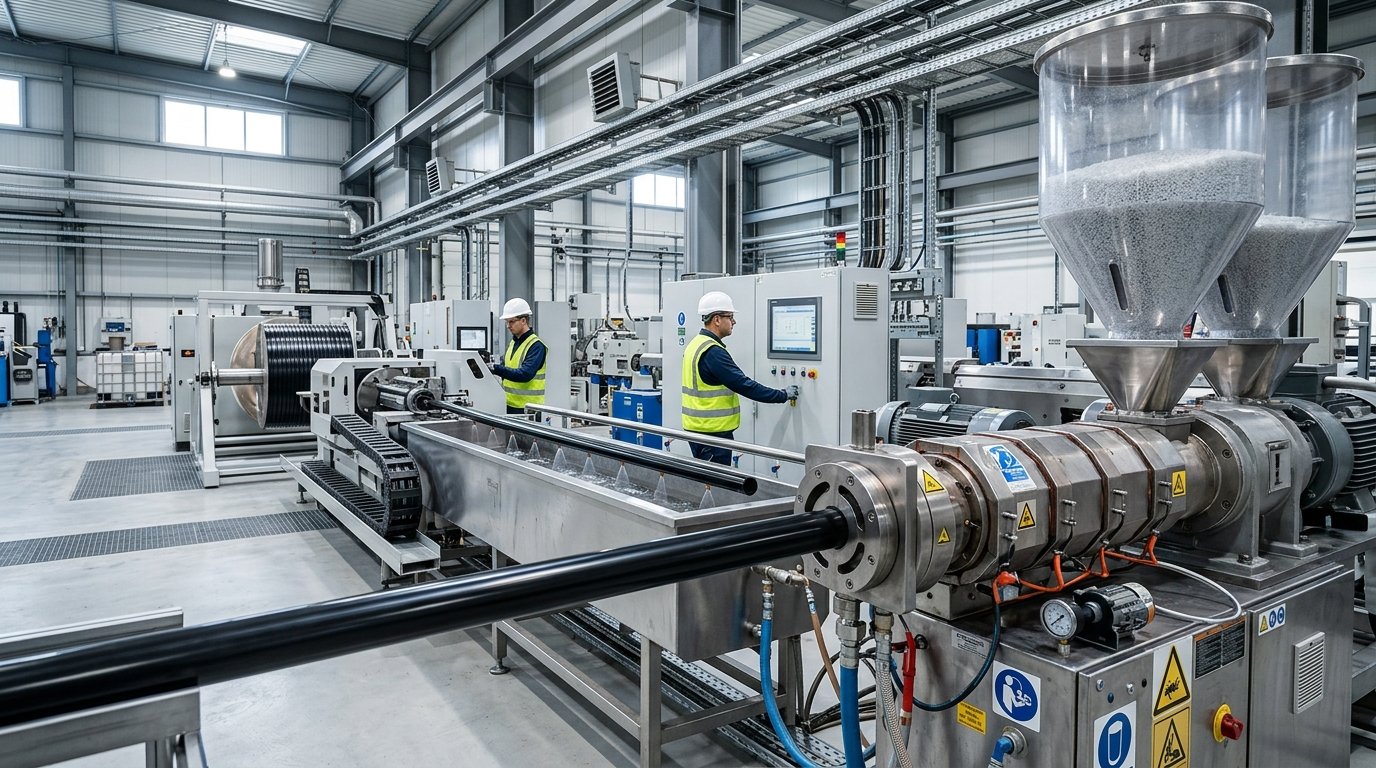
Smart manufacturing represents the integration of digital technologies—Industrial Internet of Things (IIoT), Artificial Intelligence (AI), robotic automation, cloud computing, and digital twin simulation—into physical manufacturing workflows. Across India’s plastics extrusion, polymer compounding, and building material production plants, Industry 4.0 adoption is driving unprecedented efficiency, quality consistency, and operational safety.
1. Industrial IoT & Real-Time Production Analytics
Smart factories connect machinery, extrusion dies, cooling baths, and quality inspection stations via IIoT networks. Real-time telemetry monitoring melt temperatures, screw speeds, wall thickness profiles, and power consumption allows plant operators to detect micro-variations and optimize process parameters dynamically, reducing scrap rates and energy usage.
2. Robotic Automation & Material Handling
Automated Guided Vehicles (AGVs) and collaborative robots (cobots) automate heavy material handling, resin hopper loading, sheet trimming, and palletizing. Automated robotic inspection systems using high-speed optical sensors verify product dimensions and surface quality before packaging.
3. Predictive Maintenance & Digital Twin Simulations
Digital twins—virtual digital replicas of physical production lines—simulate production runs and analyze component wear. AI algorithms analyze vibration and temperature patterns from extruder gearboxes to predict maintenance needs before catastrophic equipment breakdowns occur.
Frequently Asked Questions (FAQs)
Q1: What is the main objective of Industry 4.0 in manufacturing?
Industry 4.0 aims to connect physical machinery with digital intelligence, enabling real-time process monitoring, automated quality control, higher energy efficiency, and predictive maintenance.
Q2: How does predictive maintenance reduce factory downtime?
Predictive maintenance uses IoT vibration and temperature sensors to detect equipment wear early, allowing maintenance to be scheduled during planned downtime rather than during active production runs.
Conclusion
Smart manufacturing is reshaping the global industrial landscape. Adopting Industry 4.0 automation, IoT telemetry, and predictive maintenance ensures manufacturers achieve higher productivity, consistent quality, and competitive advantages.